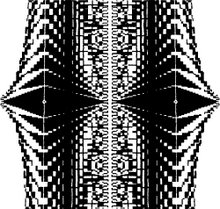
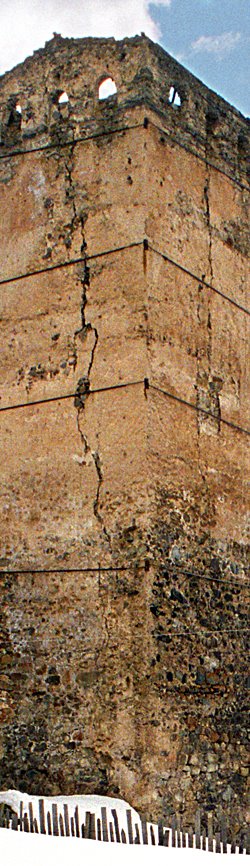
Top: World's first 360-degree Panorama of Ushguli, Svaneti, Georgia, Feb 24/2009, from 12 separate photos...

Friday, 13 April 2007

Zimbabwe, October 2006:
Elephants and heron, Lake Kariba
In October 2006 my sister and I had the chance to return to a country we had left as children 29 years earlier: Zimbabwe. Our father was born there, and there our mother died in a car accident. We were shielded from the funeral, and never actually taken to her grave, so we missed saying a final goodbye to her. This journey was that goodbye, which we accomplished near the beginning, leaving us the rest - nearly three weeks - to reacquaint ourselves with this country where we spent six years of our childhood. We were hosted throughout in grand style first by our older stepbrother, then by our younger stepsister.
(More photos to follow: I was seeing the country for the first time as both an adult and a photographer, so I made the most of it!)

Thursday, 12 April 2007

"Other" photographic processes
There are more ways than "pure" photography to capture a photographic image. One can place 2d or 3d objects onto photographic paper and then expose the paper in a darkroom, the opacity or transparency of the objects affecting the passage of light onto the paper, and then develop the paper as a normal print, called a photogram. The same kind of thing can be done with the objects placed into the negative carrier of an enlarger, if they are small and thin enough, resulting in spectacular enlarged photograms. Or one can simply scan things using a regular desktop scanner. These leaves are from the scanning process, which captures fantastic detail at high resolutions. If your scanner is set at, say, 2400 dpi (dots per inch) and your printing is to be done at 300 dpi (a good resolution for photographs), the prints can be 8 times larger than the original in length and width, which can turn a leaf into a great poster child for nature lovers or the eco-minded.


Moscow, USSR, August 19, 1991

Here are 7 shots from my monochrome film of the coup d'etat attempt against Gorbachev in Moscow, August 1991. All are scans of prints, the negatives being among those stolen from my apartment in St Petersburg in 1994; at least I still have the prints, anyway. The scans are a bit thin on detail, a bit grainy, but they're history, so we'll forgive them their defects.


Wednesday, 11 April 2007

Portrait of Chris A, Milborne Port, England, c. 1990
The original of this is a negative which was stolen along with a lot of my other material in St Petersburg in early 1994. (This loss of my work has happened only twice; but it is devastating.)
Chris had an unusual enough look to warrant some experimental portraits; this piece is from the first sitting.
The next stage in the production of this image, after shooting onto a negative, was some play in the darkroom (remember those, anyone? Anyone still using one? Plenty of photographers still are, I'll bet). While processing the print in its chemical baths I briefly switched on the light intentionally. This caused a partial reversal of some of the print's tones, a process known as the Sabbattier [?sp] effect and misknown as solarization. It is also available as a filter in Photoshop... but this was the handmade version, less predictable and always an adventure.
Then I rephotographed the print against a pencil-shaded background, and THIS is a scan of the print from the negative of that shot! Phew, how many generations is that from the original person? Chris -> negative -> "solarized" print -> negative -> print -> scan... 6 degrees from reality. I suppose that accounts for the surrealistic feeling of this, one of my favourite portraits ever.

Mestia and Mt. Tetnuldi (l of centre), March 2007
A quick day trip to the capital town. Visiting friends of Nodar's sister who have their own tower, which we were able to climb inside to its top. A view from the house over the town - I also shot through an open window, but I feel that this is the better picture, less touristy, because it shows not just a town and landscape but the context of the house interior as well.
Warning!, Etseri, March 2007

This dog would have none of us being nearby, and with its owner absent, we weren't about to find ourselves on the same side of the door as it.


Sheep, Etseri, March 2007

Just sheep, in front of the old part of Nodar's house.


Lenjeri, Svaneti, November 2003
Just down from Mestia; one classic view of watchtowers.

Tuesday, 10 April 2007

Ushba, Etseri and other views from Etseri, March 2007
My 16th trip to Svaneti. Nodar's brother encouraged me to climb a certain cellphone tower for the views and, after checking for signs of either danger or forbidding, I did so. Three times, to see the landscape at various angles of light. This was the last time, sunset, with the final rays gilding only Ushba pinkish-gold.


Frames, Etseri, February 2004


A window and a door, the ruined house and a barn, two different locations in the village.

Cracked paint, Etseri, February 2004
For some reason I am strongly drawn to this subject everywhere. Having studied chaos theory somewhat, I think it's the mix of decay-randomness and order. Natural processes impose themselves on an ordered surface and alter it in ways which obey rules but are also partly irregular.
Mountains across the Inguri R. from Etseri, February 2004


Part of a wall of mountains which forms the backdrop to Etseri. They are deceptively small-looking; even the way down to the river in order to cross them is a long trek. They are another of my muses, and I often photograph them in various weather and lighting conditions. Monochrome because there was so little colour in the scene anyway, this deep in winter.

Mt. Ushba from above Mestia, December 2003
A completely different view from the one I was used to from Etseri and Becho. The twin peaks revealed high above several villages. Not one of the highest mountains in the world, but certainly one of the most challenging to climb nonetheless, with a string of deaths resulting.

Monday, 9 April 2007


House detail, Ushgili, December 2003

The flag of Svaneti features a lion. There was a Georgian nature magazine with a photograph of a leopard on its cover in about 2004, from the Georgian-Azeri border. Hyaenas have been reported - but not proved - in the Khevsureti region of Georgia south of Chechnya. Of wolves and bears we need not speak - they are definitely still around.


Carved door closeup, Ushguli house museum, December 2003

This magnificent work is actually for sale, for US$4000 the last I heard. Many hundreds of hours must have gone into it. Any takers?


At last! Ushguli, one of the most inaccessible places in all of Georgia, and for that and for its own beauty one of the most rewarding to visit. Often the roads to it are closed by snow for much of the winter as it is the highest permanently inhabited village in Europe. C. 50 families; 7 churches, most of them tiny; many watchtowers; 2 amazing museums; part of it a UN Heritage protected site; an antique jewel.


Sunday, 8 April 2007


More looking for the unusual in the ordinary.
(Yes, I know that today's photos so far have much more to do with autumn than spring, in colours and themes; but never mind. The Southern Hemisphere is having autumn now, anyway!)


Fall colours, central Svaneti, October 2002
Returning to Etseri for Nodar's father's year memorial. Along with the funeral memorial feast there is another roughly 40 days later, and then this, the final one.

Stream, Etseri, June 2003
The water of "home" again. And such a beautiful sound it makes.

Easter 2007

This year the whole Christian world (as far as I know) is lined up for Easter, whereas more often than than not the Eastern churches are on a different date.
All is quiet on the streets of Tbilisi as many people of various denominations were at midnight-to-dawn services last night.
And there's a distinct air of Spring in the air at last: Resurrection Season.

As they say here, Christ is risen! And the answer: Risen indeed!